
Legal Disclaimer: NY Safe Inc. and Peter Ticali are not attorneys, and nothing on this page constitutes legal advice. New York firearms law is complex, actively enforced, and subject to ongoing litigation. Laws and court rulings described here reflect the situation as understood in April 2026 and may have changed. Consult a qualified attorney licensed in New York for guidance specific to your situation.
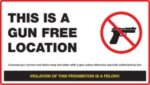
Knowing where you can legally carry a concealed handgun in New York — and where you cannot carry in NY — is just as important as obtaining your pistol permit. The NY sensitive locations law — enacted through the 2022 Concealed Carry Improvement Act and codified at NY Penal Law §265.01-e — designated a sweeping list of public and private locations as no-carry zones, with felony-level penalties for violations. The NY CCIA (Concealed Carry Improvement Act) is the law that defines sensitive locations and carry restrictions across the state.
A wrong turn into a prohibited place — a government building, a school, a hospital, a subway platform, or a posted business — can expose a fully licensed permit holder to criminal charges, license revocation, and life-altering legal expense, even if the carry itself was lawful in every other respect. This is not an abstract compliance issue. It is a daily risk-management problem for every armed New Yorker. Many permit holders assume that having a license means they are legal everywhere — in New York, that assumption can turn into a felony arrest in seconds.
This guide answers exactly where you can carry in NY — and just as importantly, where you absolutely cannot. It covers the current status of the private-property rule after federal court challenges, and what to do if police stop you while armed. If you still need the required training, start with NY Safe’s New York 16+2 Concealed Carry Class — accepted by Nassau, Suffolk, Westchester, and NYC.
In simple terms: if you’re asking where can you carry in NY, the answer depends entirely on whether the location is classified as sensitive under current law.
Quick Answer
Where can you carry in NY? Licensed permit holders may carry in lawful public spaces, their own property, and private property where carry is not prohibited. You cannot carry in designated sensitive locations — including schools, government buildings, public transit, hospitals, polling places, and certain other locations listed under NY Penal Law §265.01-e. Violating this law is a Class E felony even with a valid pistol license.
Contents
2. Where You Can Carry in NY (Legal Concealed Carry Locations)
3. Where You CANNOT Carry: Sensitive Locations
4. The Penalty: Class E Felony
5. Traveling with a Concealed Firearm in NY
6. Concealed Carry on Private Property: Current Status
7. Police Encounters While Carrying
8. Key Takeaways for NY Permit Holders
Frequently Asked Questions
1. What This Means for NY Gun Owners in 2026
For New York permit holders in 2026, the operating principle is simple: do not rely on assumptions. Places that feel ordinary in daily life can be legally dangerous carry locations under the CCIA. A routine stop at a government office, a hospital visit, a subway ride, or a polling place on election day can each create felony exposure if you are armed and have not verified the location’s status.
The sensitive-location framework has also been the subject of ongoing federal litigation. Portions of the CCIA have been challenged, enjoined, modified on appeal, and litigated through the Second Circuit. The law as enforced in 2026 is not identical to what was signed in July 2022. Some provisions were struck; others survived. For a complete legal status report on each provision, see our in-depth 2026 sensitive locations analysis.
2026 Practical Checklist
| ✓ | Plan before you go. Know whether your destination involves transit, a hospital, a government office, a school, or posted private property. |
| ✓ | Do not “just chance it.” A routine stop in a prohibited place can become a Class E felony arrest, even for a fully licensed carrier. |
| ✓ | Comply with posted signage. If a business posts no-gun signage or staff tells you firearms are not allowed, leave the firearm in the vehicle or do not enter while armed. |
| ✓ | Train for real-world legal realities. Good training covers sensitive locations, transport rules, police encounters, and use-of-force law — not just shooting fundamentals. NY Safe’s NY concealed carry class covers all of this. |
For related guidance, read our articles on how to handle police encounters while carrying and when you can use force in New York.
2. Where You Can Carry in NY (Legal Concealed Carry Locations)
This is the practical answer to the question of where you can carry in NY as a concealed carry permit holder. Assuming you have completed the New York 16+2 Concealed Carry Class and received your pistol permit, you may generally carry a concealed handgun in the following locations — subject always to the restrictions described in Section 3 and any location-specific rules:
|
✓
|
Your own private residence or personal property |
|
✓
|
Property with the express consent of the owner — verbal or posted permission |
|
✓
|
Certain public spaces not designated as sensitive — sidewalks, non-restricted commercial areas, and other lawful public spaces not otherwise prohibited by statute |
|
✓
|
Inside a vehicle, provided the firearm is lawfully possessed, you hold the required license, and you are not entering or stopped in a prohibited location |
|
✓
|
Private property open to the public where no signage is posted and no prohibition has been communicated — subject to the private-property discussion in Section 6 |
Need the Required Training? Choose Your County:
| Nassau County → | Suffolk County → | New York City → | Westchester → |
3. Where You CANNOT Carry: Sensitive Locations
Under NY Penal Law §265.01-e and the CCIA, the following categories are currently designated as sensitive locations — no-carry zones for permit holders. This list reflects the law as enforced in 2026, after applicable court rulings. Some provisions remain in active litigation.
|
Education & Children
Schools, childcare facilities, and grounds — including public and private K–12, nursery schools, and licensed childcare centers |
Government & Courts
Government buildings, courthouses, police stations, and facilities used for government administration at the local, state, or federal level |
|
Public Transportation
Buses, subways, commuter trains, platforms, and stations — one of the highest-risk categories under current NY law |
Health Care
Hospitals, clinics, mental health facilities, nursing homes, and other licensed health care facilities |
|
Places of Worship
Churches, synagogues, mosques, and other religious facilities — the place-of-worship provision has been heavily litigated and remains subject to ongoing court proceedings. Exercise caution. |
Voting & Elections
Polling places, early voting sites, and locations used for any electoral function — this includes school buildings used as polling sites |
|
Alcohol-Centered Locations
Locations primarily engaged in on-premises alcohol consumption as defined under NY law. Note: general restaurants that serve alcohol as part of a dining experience are a different and more nuanced analysis — see the FAQ. |
Public Gatherings & Protests
Public demonstrations, permitted gatherings, and certain public events — the scope of this restriction has been contested in litigation |
|
NYC Specific
Times Square and other areas specifically designated within New York City by local authority under the CCIA framework |
Actively Litigated
Parks, playgrounds, zoos, and certain recreational areas — status varies by jurisdiction and is subject to pending federal litigation. Check current court status before carrying in these locations. |
This list is a summary, not a complete legal inventory. The CCIA’s full sensitive-location list is longer, and specific locations may be added or modified by local ordinance, court order, or future legislation. For a detailed provision-by-provision legal status report, see NY Safe’s 2026 sensitive locations analysis.
If you’re unsure whether a place is allowed, the safest assumption in New York is that it may be restricted until you confirm otherwise.
4. The Penalty: Class E Felony
Under NY Penal Law §265.01-e, carrying a firearm in a designated sensitive location is a Class E felony — even if you hold a valid New York pistol license, even if you did not know the location was restricted, and even if you never drew the weapon or intended any harm. Importantly, the statute does not require criminal intent — accidental entry into a restricted location while carrying can still result in felony charges.
|
Up to 4 Years
State Prison
|
Permanent
Felony Record
|
Automatic
License Revocation
|
This is separate from and less serious than unlicensed carry, which is Criminal Possession of a Weapon in the Second Degree — a Class C violent felony carrying up to 15 years. Even the lesser sensitive-location charge is a life-altering event. The process itself — arrest, arraignment, legal fees, bail — is punishing regardless of outcome.
5. Traveling with a Concealed Firearm in NY
Transporting a firearm while not actively carrying it on your person — in a vehicle, while commuting, or across county lines — is subject to its own rules. The key principles:
| › | When not carrying on your person, the firearm should be unloaded, secured in a locked container, and appropriately stored — separate from ammunition where required. |
| › | You must not enter or stop at prohibited jurisdictions — including schools, government facilities, sensitive locations, and other restricted areas — even while transporting. |
| › | New York does not recognize out-of-state carry permits. A permit from another state does not authorize carry in New York, and New York permit holders need separate state-by-state authorization to carry outside New York. |
| › | If you carry into New Jersey or Connecticut, different state laws apply — including New Jersey’s explicit permit-presentation requirement. See NY Safe’s multi-state concealed carry training options, including the NJ CCARE qualification course. |
If you expect any interaction with law enforcement while traveling with a firearm, review NY Safe’s full guide on police encounters while carrying.
6. Concealed Carry on Private Property: Current Status
The private-property question has been one of the most contested elements of the CCIA. Understanding the current status requires knowing what the original law said, what the courts have done to it, and what actually governs carry on private property in 2026.
What the CCIA Originally Said
The original CCIA presumed that carry was prohibited on all private property unless the property owner provided express affirmative permission — either through signage or direct notice. This created an opt-in framework: carry was forbidden by default, and owners had to actively permit it.
What the Courts Did
That broad default-ban provision was heavily challenged in federal court — most significantly in Antonyuk v. James — and did not survive in its original sweeping form. The Second Circuit’s decisions in the Antonyuk litigation significantly altered how the private-property restriction operates. The blanket opt-in presumption for all private property open to the public is not currently enforced as originally enacted.
Practical Rules for 2026
| ✓ | Do not assume every private business is automatically off-limits for carry simply because it is private property open to the public. |
| ✗ | Comply immediately if the property owner posts no-gun signage or informs you that firearms are prohibited — this remains legally enforceable regardless of the opt-in litigation. |
| ⚠ | Be especially cautious on private property not open to the public — permission requirements are stricter and the CCIA’s default rules remain more intact in that context. |
| ⚠ | This area is still actively litigated. Do not treat any summary — including this one — as a substitute for consulting a licensed NY firearms attorney before carrying on disputed private property. |
7. Police Encounters While Carrying
Knowing where you can carry is only half the equation. Knowing what to do if police stop you while armed is the other half — and getting it wrong can turn a routine traffic stop into a serious legal event even if your carry location was completely lawful.
Your Four-Sentence Roadside Protocol
“I am lawfully carrying. My firearm is holstered on my right hip. I am invoking my Fifth Amendment right to remain silent. I do not consent to any search.”
NY Safe’s full police encounters guide covers disclosure protocols for NY, NJ, and CT; why keeping the firearm holstered protects you under the plain-view doctrine (Arizona v. Hicks); why silence alone is not enough to invoke the Fifth Amendment (Salinas v. Texas); and New York’s stronger “indelible right to counsel” under People v. Cunningham.
8. Key Takeaways for NY Permit Holders
| 1. | Get the required training first. The New York 16+2 Concealed Carry Class is the starting point. It covers sensitive locations, use-of-force law, and police encounter protocols — not just shooting qualification. |
| 2. | Know your county’s process. The carry environment in NYC feels different from Nassau, Suffolk, or Westchester even when the statewide law is identical. Use the county-specific training pages for NYC, Nassau, Suffolk, and Westchester. |
| 3. | Stay current on the law. New York carry law is actively litigated. The rules that applied in 2022 are not identical to those enforced in 2026, and further changes are coming from pending federal cases. |
| 4. | Prepare for police encounters. Being stopped while carrying in a lawful location can still go badly without proper protocols. Know the disclosure rules for NY, NJ, and CT before you carry across state lines. |
| 5. | Understand use-of-force law. Knowing where you can carry does not tell you when you can use the firearm. Read NY Safe’s guide on when you can use force in New York. |
NY Safe Inc.
The Sensitive Locations Module Is Part of Every Class
NY Safe covers sensitive locations, use-of-force law, police encounter protocols, and live-fire qualification in every 18-hour class. The curriculum teaches you not just how to shoot — but where you can carry and what happens when things get complicated.
FAQ
Frequently Asked Questions About NY Sensitive Locations
Can you carry in a restaurant in New York? +
It depends on the type of establishment. Locations primarily engaged in on-premises alcohol consumption as defined under NY law are listed as sensitive locations under NY Penal Law §265.01-e. General restaurants that serve alcohol as part of a dining experience are a different and more nuanced analysis. Permit holders should verify the specific establishment type and whether any no-gun signage is posted before entering while armed.
Can you carry on private property open to the public in New York? +
The CCIA’s original broad default ban on carry in private property open to the public did not survive in its sweeping form after federal challenges in Antonyuk v. James. In practical terms, you should not assume every private business is automatically off-limits — but you must comply immediately if the owner posts no-gun signage or communicates that firearms are prohibited. This area remains actively litigated. Consult a licensed NY firearms attorney for guidance on your specific situation.
Is carrying in the wrong place in NY really a felony? +
Yes. Under NY Penal Law §265.01-e, carrying in a designated sensitive location is a Class E felony — even with a valid pistol license. A Class E felony carries up to 4 years in state prison, a permanent felony record, and loss of your pistol license. This charge is separate from unlicensed carry, which is a Class C violent felony carrying up to 15 years.
Does a NY pistol permit let you carry everywhere in the state? +
No. A New York pistol permit does not override sensitive location restrictions, private property rules, or other location-specific prohibitions. The permit authorizes carrying in lawful locations only. Entering a designated sensitive location while armed exposes you to felony charges regardless of permit status.
Can you carry on the subway, train, or bus in New York? +
Public transportation is one of the highest-risk categories under New York carry law. Buses, subways, and trains are listed as sensitive locations under the CCIA. You should assume serious criminal exposure before entering transit while armed, regardless of permit status.
What should I do if I am stopped by police while carrying? +
Stay calm, keep your hands visible, and do not reach for the firearm. If disclosure is required or you choose to disclose, do so before reaching for any documents. Invoke your Fifth Amendment right to remain silent clearly if questioning becomes serious — silence alone is not enough under Salinas v. Texas. Read NY Safe’s full guide on police encounters while carrying a concealed firearm.
What training do I need before applying for NY concealed carry? +
New York requires 16 hours of classroom instruction plus 2 hours of live-fire training — commonly called the 18-hour NY CCW class. NY Safe’s New York 16+2 Concealed Carry Class satisfies this requirement for applicants in Nassau, Suffolk, Westchester, and NYC. The curriculum covers sensitive locations, use-of-force law, police encounter protocols, and live-fire qualification.
|
PT
|
About the Author Peter Ticali NRA Endowment Life Member · NRA & USCCA Certified Instructor · Licensed Firearms Instructor: NY, MD, DC, MA, UT · NY Pistol License Holder Since 1992 Peter Ticali is the founder and lead instructor of NY Safe Inc., a firearms training and Second Amendment advocacy organization serving the New York metro area. He is a graduate of the FBI Citizens Academy and the Suffolk County Police Department Citizens Academy, and a member of FBI InfraGard and SCPD Shield. His legal commentary on New York firearms law has been recognized by a retired New York criminal court judge. Peter has held a New York pistol license since 1992 and teaches the NY 16+2 Concealed Carry Class accepted by Nassau, Suffolk, Westchester, and NYC. NY Safe Inc. is not a law firm. Peter Ticali is not an attorney. Nothing on this page constitutes legal advice. |
Sources & Legal References
- NY Penal Law §265.01-e — sensitive locations under the CCIA
- NY Penal Law §265.03 — Criminal Possession of a Weapon in the Second Degree (unlicensed carry)
- NY Penal Law §400.00 — pistol licensing framework
- Antonyuk v. James — Second Circuit litigation challenging CCIA provisions including the private-property default ban
- New York State Rifle & Pistol Association v. Bruen, 597 U.S. 1 (2022) — Supreme Court standard for Second Amendment analysis
- New York Concealed Carry Improvement Act (CCIA), signed July 1, 2022
Legal status as understood in April 2026. New York firearms law is actively litigated and subject to change. Verify current law with a qualified New York firearms attorney.
Legal Disclaimer: This content is for informational and educational purposes only and does not constitute legal advice. NY Safe Inc. and Peter Ticali are not attorneys. Laws, court rulings, and enforcement practices described here reflect the situation as understood in April 2026 and are subject to change. Individual circumstances vary. Always consult a qualified attorney licensed in New York for legal guidance specific to your situation. Nothing on this page should be taken as an authorization to carry in any specific location — that determination depends on the current law, your specific license, and the facts of your situation.

No responses yet