
Safety & Awareness — NY Safe Inc.
You Have Value. You Have Power. Here Is Your Safety Plan.
Domestic violence does not always end when the relationship ends. Sometimes the most dangerous window opens exactly when a survivor starts to reclaim their life. This guide applies the principles of the NRA Refuse To Be A Victim® program — awareness, preparedness, and layered safety — to one of the most important personal safety challenges a person can face.
⚠ If You Are In Danger Right Now
Call 911 immediately. If your internet use may be monitored, use a safer device or clear your history after reading. Confidential help 24/7: National Domestic Violence Hotline 800-799-SAFE (7233) · Text START to 88788 · thehotline.org
By Peter Ticali — NRA Certified Refuse To Be A Victim® Instructor · NRA Endowment Life Member · NY Pistol License Holder Since 1992
Published May 2026 — NY Safe Inc.
This guide draws from Peter Ticali’s training as a certified NRA Refuse To Be A Victim® instructor and more than three decades of personal safety education on Long Island.
In This Guide
- → You Matter: What Abuse Actually Is
- → The Safety Gap: Why Leaving Can Increase Danger
- → Warning Signs: How to See It Coming
- → The Four-Part Safety Plan
- → Emotional Safety and Clarity
- → Physical Safety and Home Security
- → Digital Safety
- → Legal Protections in New York
- → Stalking and Harassment
- → What Friends and Family Should Do
- → Long Island and New York Resources
- → FAQ: Safety, Protection, and Your Options

Photo: Liana S / Unsplash (free commercial use)
Quick Answer
What is a domestic violence safety plan?
A domestic violence safety plan is a practical, private plan that helps a survivor recognize danger, reduce exposure, prepare an exit, protect children, secure the home, document threats, and connect with advocates, police, courts, and trusted people.
A good safety plan does not blame the victim. It recognizes that abuse is about power and control — and that leaving an abuser can sometimes trigger escalation. The most important message in this guide: you matter, your instincts matter, and you do not have to prove that abuse is “bad enough” before you ask for help.
Need help fast? Jump to: Emergency Resources · Home Security · Orders of Protection
You Matter: Abuse Attacks Identity Before It Attacks the Body

Photo: Stockcake (free commercial use)
Before many abusers become openly violent, they attack the person they are trying to control. They attack identity. Confidence. Self-worth. The belief that you are capable of surviving on your own.
They say things designed to make that destruction feel like your fault:
- “No one else would want you.”
- “You’re crazy.”
- “You make me act this way.”
- “You’re lucky I put up with you.”
- “You’ll never survive without me.”
- “If you leave, I’ll ruin you.”
- “If I can’t have you, nobody will.”
That degradation is not random. It is strategic. Abusers destroy confidence because confident people are harder to control. They isolate victims because supported people are harder to trap. They normalize fear because frightened people often stop trusting their own judgment.
If someone has spent months or years making you feel small, helpless, guilty, dependent, or unworthy — here is the truth they tried to hide from you:
You are not worthless. You are being controlled. Those are not the same thing.
You may feel confused. You may still love this person. You may feel guilty, embarrassed, or ashamed. You may have left and gone back before. You may feel like you “should have known.” None of that means you are weak. Abuse is not only physical force. It is a system of pressure, fear, dependency, humiliation, and hope.
The U.S. Department of Justice Office on Violence Against Women defines domestic violence as a pattern of abusive behavior used by one partner to gain or maintain power and control over another — including physical, sexual, emotional, economic, psychological, and technological actions or threats. What is happening to you has a name. It has been studied. It is documented. And you are not imagining it.
“The abuse is not proof that you are weak. The abuse is proof that someone wanted power over you. Survival begins with rejecting the abuser’s story about who you are.”
NY Safe Inc.
The Safety Gap: Why Leaving Can Increase Danger
Many people believe the end of a relationship is the end of the danger. For some survivors, a breakup feels like the first clean breath after months or years of fear. And it can be. But researchers, advocates, and law enforcement have long recognized that domestic violence after breakup can escalate — sometimes into stalking, forced entry, harassment, or serious violence. It can also open what safety professionals recognize as one of the most dangerous windows in a domestic violence situation.
A recent Suffolk County case illustrates this plainly. Prosecutors alleged that a Patchogue man entered his ex-girlfriend’s home through a window and attacked her son — after the relationship had already ended and after he had been locked out. Suffolk County District Attorney Raymond A. Tierney stated: “Domestic violence does not always end when a relationship does; it often escalates.”
We call this window the Safety Gap — the period when a survivor has started to reclaim control, but the abuser may still know the survivor’s routines, passwords, address, relatives, workplace, spare keys, camera systems, and emotional triggers. The Safety Gap is not the survivor’s fault. It is the predictable result of an abuser having too much access for too long.
Source: Suffolk County District Attorney’s Office statements and contemporaneous Patch.com reporting on the Patchogue stabbing investigation, 2024.
That does not mean survivors should stay. It means leaving safely is a planned operation, not a single desperate moment. A safe exit is often a prepared exit.
What Domestic Violence Includes
Domestic violence is not only physical violence. It includes:
- Physical violence and injury
- Sexual abuse and coercion
- Emotional abuse and psychological intimidation
- Economic control — restricting money, sabotaging employment, forcing dependency
- Stalking — in person and through technology
- Technology-facilitated surveillance and harassment
- Coercive control over decisions, clothing, relationships, and movement
Domestic violence affects women, men, LGBTQ individuals, teenagers, elderly adults, and people across every race, profession, income level, and community. Abuse does not discriminate, and neither does the need for safety.
Warning Signs: How to See It Coming
Domestic violence rarely begins with the worst act. It often begins with boundary violations explained away as love, passion, jealousy, stress, or “just how relationships are.” Learning to name these patterns is an act of self-protection.
- Jealousy framed as devotion: “I just love you so much I can’t stand seeing you with other people.”
- Isolation: Discouraging friends, family, work, hobbies, or community involvement.
- Monitoring: Checking your phone, location, messages, mileage, cameras, or receipts.
- Financial control: Restricting money, taking paychecks, hiding accounts, or forcing dependency.
- Humiliation: Insults, sarcasm, public embarrassment, or constant criticism.
- The cycle of explosion and apology: Rage, fear, apology, affection — and then the same thing again.
- Threats: Against you, your children, pets, relatives, immigration status, or reputation.
- Property destruction: Punching walls, breaking phones, throwing objects, slashing tires.
- Boundary refusal: Showing up after being told not to, refusing to leave, treating “no” as temporary.
- Stalking behavior: Following you, fake accounts, drive-bys, tracking devices.
- Technology control: Passwords, cameras, smart locks, tracking apps, or spyware.
If you are changing your behavior to avoid someone’s anger, hiding normal activities to prevent accusations, or constantly calculating how to keep the peace — you are not in a healthy relationship. That is not love. That is control.
“Fear is information. Your body may be recognizing danger before your mind has words for it. You are not overreacting. You are reading the situation accurately.”
NY Safe Inc.
The Four-Part Domestic Violence Safety Plan
A complete safety plan addresses four areas. No single layer is enough on its own. Together, they reduce exposure, create time and distance, document what is happening, and connect survivors with the people and systems that exist to help them.
Part 1
Emotional Safety
Recognizing abuse, rejecting shame, building a reality anchor, and connecting with advocates who believe you.
Part 2
Physical Safety
Home hardening, escape routes, emergency contacts, a go-bag, and safe places to go.
Part 3
Digital Safety
Passwords, tracking apps, cameras, shared accounts, spyware, and preserving evidence safely.
Part 4
Legal and Community Safety
Police reports, orders of protection, documentation, shelters, attorneys, and trusted people who stand with you.
Do not create this plan on a shared computer, shared phone, or any device the abuser may monitor. Use a trusted friend’s device, a public library computer, a victim advocate’s office, or a phone the abuser has never controlled.
Safety Plan Part 1: Emotional Safety and Clarity
Abusers create confusion intentionally. Confusion keeps survivors frozen, second-guessing their own memories, asking themselves whether it was really “that bad.” A safety plan begins by naming what is happening — clearly, in your own words, on paper.
Write down the facts in plain language:
- What did they do?
- When did it happen?
- Who saw it?
- Was there a threat? Was there injury?
- Were children or pets present or threatened?
- Were weapons mentioned or displayed?
- Was property damaged?
- Did they block you from leaving?
- Did they choke, strangle, smother, or restrict your breathing?
That last item is critical. Strangulation is a documented escalation marker. If someone has put hands around your throat, covered your mouth, or restricted your breathing at any point — treat that as urgent danger and speak with police, a medical professional, and a domestic violence advocate as soon as it is safely possible. The National Domestic Violence Hotline has published detailed guidance on the dangers of strangulation and why it must be taken seriously as a life-threatening escalation indicator.
Emotional safety also means building a reality anchor — one or two trusted people who will not minimize what you are telling them. Tell them the truth, in simple words: “I am afraid of what this person may do. I need you to know what is happening. If I send you the word ‘red,’ call 911. If I send you the word ‘yellow,’ call me and stay on the phone.”
You do not owe anyone a perfect explanation. You are allowed to ask for help before things become catastrophic. You do not have to be bleeding to deserve help. You do not have to have been hit to be in danger.
⚠ High-Risk Escalation Signals — Take These Seriously
If the abuser has done or threatened any of the following, treat the situation as high risk. Do not minimize it because the person later apologizes:
- Strangulation or obstruction of breathing at any point
- Threats to kill you, themselves, or others
- Threats involving weapons — including firearms
- Threats involving children, kidnapping, or school pickup
- Arson threats or serious property destruction
- Escalating frequency or severity of any abusive behavior
Safety Plan Part 2: Physical Safety and Home Hardening
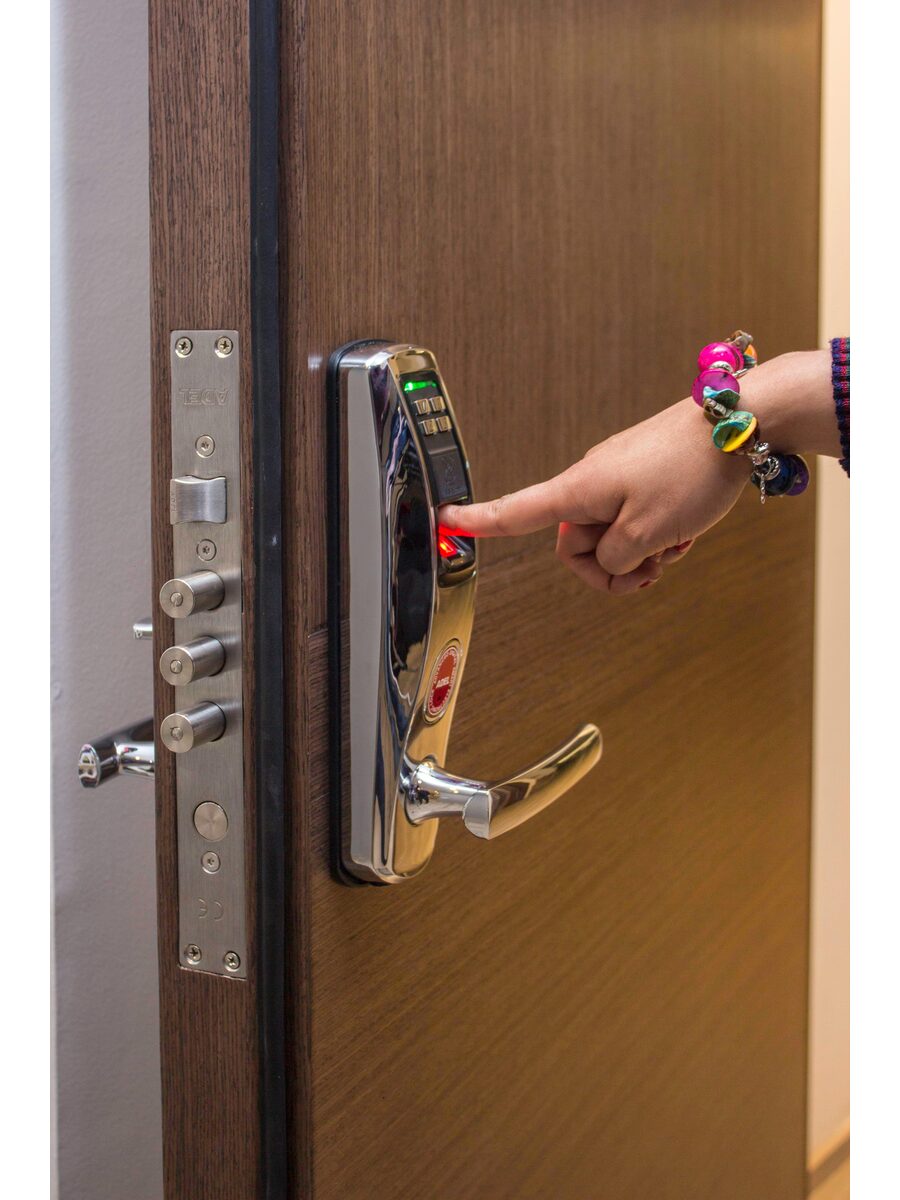
Photo: Unsplash free license
Home security is not about living in fear. It is about making violence harder, louder, slower, and more visible. The goal is to create time, distance, and options.
In the Suffolk County case that prompted this article, prosecutors alleged entry was made through a window — after the suspect was already locked out of the front door. Many homes are well-secured at the front but vulnerable at windows, rear doors, garages, and sliding entries. Walk your home like someone trying to get in.
Doors
- Change locks if the abuser ever had a key.
- Remove any hidden spare keys from the exterior.
- Install quality deadbolts on all exterior doors.
- Use 3-inch screws in strike plates so hardware anchors deep into framing.
- Check garage entry doors, basement doors, and side doors — not only the front.
Windows
- Lock every window every night.
- Add dowels or security bars to sliding windows and doors.
- Use inexpensive contact alarms or chimes on vulnerable windows.
- Trim shrubs that provide concealment around windows or entries.
Lighting, Alarms, and Cameras
- Add motion lights near every entrance, including rear yard, garage, and side path.
- Use audible entry chimes so a door or window opening wakes the household.
- Doorbell cameras document and deter — but they supplement calling police, they do not replace it.
- Make sure the abuser has no access to camera apps, alarm accounts, or smart home systems.
Safe Room and Go-Bag
Identify one room with a solid door, a working lock, cell service, and a second exit if possible. Keep a charged phone and charger there. Teach family members where to go if someone breaches the home.
Prepare a go-bag stored somewhere safe — at a trusted person’s home, at work, or anywhere the abuser cannot access. Include: ID, medications, keys, cash, charger, clothes, birth certificates, and copies of any court documents.
“A locked door, a loud alarm, a charged phone, and a plan can buy the most valuable thing in a violent emergency: time. Time is survival.”
NY Safe Inc.
Safety Plan Part 3: Digital Safety
Modern domestic violence frequently includes technology as a tool of monitoring, harassment, and control. Survivors often do not realize how much digital access an abuser has accumulated over the course of a relationship.
- Change all passwords from a safe device the abuser has never controlled.
- Use two-factor authentication with codes sent to a phone the abuser does not have access to.
- Check Apple Find My, Google location sharing, Life360, vehicle apps, AirTags, and Tile trackers.
- Review access to smart locks, doorbell cameras, thermostats, Wi-Fi routers, and garage openers.
- Change passwords on streaming, banking, phone carrier, email, and social media accounts.
- Check whether the abuser knows security questions, recovery emails, or backup numbers.
- Preserve threatening texts, voicemails, screenshots, emails, and call logs as documentation.
Do not announce your digital audit to the abuser. Sudden loss of access can trigger escalation. If you suspect spyware, involve a domestic violence advocate or digital safety professional before making changes that could alert the abuser.
Safety Plan Part 4: Legal Protections and Orders of Protection in New York
An order of protection is a serious legal tool. It can restrict contact, require someone to stay away, protect family or household members, address custody or support issues, and in some cases restrict the abuser’s access to firearms.
Key facts about New York orders of protection:
- An order must be properly served to be enforceable.
- If violated, call police, file a violation in Family Court, or contact an advocate.
- The restrained person remains legally responsible for complying with the order, even if contact is attempted by the protected party.
- Orders can be issued through Family Court, criminal court, Supreme Court, or New York’s Integrated Domestic Violence Courts.
- New York’s Hope Card program provides a portable physical or digital summary of a final order of protection.
Legal protection matters enormously. But an order of protection is a legal document — not a physical barrier. The right approach is layered: legal action, police reporting, advocacy, documentation, home hardening, trusted people, and emergency planning, all working together.
When Children or Family Members Are Also at Risk
Domestic violence rarely affects only one person. Children, adult children, parents, roommates, new partners, and friends can all become targets — especially during the Safety Gap period. A safety plan should include the household, but children should not be made responsible for adult safety.
Give children simple, calm, age-appropriate information:
- How to call 911 and what to say.
- Where to go inside the home if danger happens.
- Which neighbor or relative is always safe to go to.
- What code word means “leave now” or “call for help.”
- Not to physically intervene unless there is absolutely no other choice.
- Not to open the door for the abuser, even if the abuser is crying or apologizing.
Keep the language calm. Children who know what to do feel less frightened than children who sense danger with no direction.
Stalking and Harassment: When They Keep Showing Up
Stalking is not romance. It is not persistence. It is not proof of love. It is a crime and a serious public health problem.
Source: CDC National Intimate Partner and Sexual Violence Survey (NISVS) and the Stalking Prevention, Awareness, and Resource Center (SPARC) — cdc.gov · stalkingawareness.org
- Repeated unwanted calls, texts, or messages.
- Showing up at your workplace, school, gym, or grocery store.
- Driving past your home repeatedly.
- Using fake accounts to monitor your social media.
- Contacting your friends or family to gather information about you.
- Leaving notes, objects, or threats at your door or vehicle.
- Following you in person or tracking your location through technology.
If someone keeps “coincidentally” appearing where you are, stop treating it as coincidence. Start documenting.
Stalking documentation log — record every incident:
- Date and time
- Location
- What happened in specific detail
- Witnesses present
- Photos, screenshots, call logs, or camera footage
- Police report numbers and responding officer names
If You Believe the Situation Is Escalating — Act Now
If you believe danger is rising, do not wait for certainty. Take action quietly and carefully.
- Tell one trusted person the truth. Plain words: “I am afraid this person may hurt me.”
- Contact a domestic violence advocate from a safe phone or device.
- Create a code word with friends, family, children, or neighbors.
- Prepare a go-bag — ID, medications, keys, cash, documents, charger, clothes.
- Document threats and incidents without alerting the abuser.
- Change locks and access codes after separation, if safe to do so.
- Audit digital access with help from an advocate.
- Vary your routines if stalking or ambush is a concern.
- Do not meet alone for “closure.” These meetings can become high-risk confrontations.
- Call 911 if there is immediate danger.
What Friends, Family, Neighbors, and Coworkers Should Do

Photo: Unsplash free license
Support people often unintentionally make things worse — not through cruelty, but through comments that place blame on the wrong person. Judgment is not support. Believing someone is.
Do Not Say
- “Why didn’t you just leave?”
- “I would never put up with that.”
- “Are you sure it was that bad?”
- “Just block him.”
- “Just get over it.”
Say This Instead
- “I believe you.”
- “You do not deserve this.”
- “You are not crazy.”
- “You matter.”
- “I will help you make a plan.”
- “You can call me anytime.”
- “Let’s contact an advocate together from a safe phone.”
If you are a neighbor and hear screaming or breaking glass — call police if you believe someone is in danger. Do not wait for certainty. Do not physically intervene; that can place you in danger too. Your role is to call.
Long Island and New York Domestic Violence Resources
If you are in immediate danger: Call 911.
National
National Domestic Violence Hotline: Call 800-799-SAFE (7233) · Text START to 88788 · thehotline.org
New York State
NYS Office for the Prevention of Domestic Violence: Orders of protection, Hope Cards, statewide resources. Orders of Protection
New York State Coalition Against Domestic Violence: County-by-county program directory. Find Help Directory
Crime Victims Help NY: Safety planning and evidence preservation guidance. Safety Plans
Suffolk County and Long Island
Suffolk County S.T.O.P. Violence Against Women: Suffolk County Women’s Services
Suffolk County S.T.O.P. DV Hotline: 631-853-8222 · For emergencies, call 911 · S.T.O.P. Violence Against Women
The Retreat: Safety, shelter, counseling, legal advocacy, and support. Hotline: 631-329-2200. TheRetreatInc.org
ECLI-VIBES: Crisis support, legal aid, counseling, safety planning. ECLI-VIBES.org
A trained advocate can customize a safety plan around your specific situation — including children, housing, finances, immigration, disability, pets, court, weapons, stalking, and technology.
The NRA Refuse To Be A Victim® Framework
The NRA Refuse To Be A Victim® program was developed in 1993 specifically in response to women seeking real crime prevention and personal safety information. It has since grown into one of the NRA’s flagship general operations programs, presented across the country by certified instructors. Peter Ticali of NY Safe Inc. is a certified RTBAV instructor and draws directly from this curriculum in his personal safety work on Long Island.
The program’s core message applies directly to domestic violence survivors: you control your environment, your schedule, your awareness, and your responses — even when you cannot control the threat. Several RTBAV principles translate directly into a domestic violence safety plan.
→
Alertness – Awareness – Avoidance – Action
The RTBAV four-step model applies directly: recognize the signs early, stay aware of escalation, avoid unsafe situations, and take action before a confrontation develops.
■
Safe Room Preparedness
RTBAV’s safe room framework: strong door and lock, charged cell phone, flashlight, and a practiced plan with all household members. The goal is time and communication — not confrontation.
◯
Trust Your Intuition
RTBAV defines intuition as “knowing or sensing something without the use of rational processes.” If something feels wrong, it probably is. That instinct is not weakness — it is your earliest warning system.
▲
Layers of Security, Not One Answer
RTBAV’s foundational instruction: no single tip or tool works for everyone. The goal is to offer a wide range of options so each person can build the strategy that fits their life and situation.
RTBAV Home Security Checklist — Directly Applicable to DV Safety
- Single-cylinder deadbolt locks on all exterior doors
- 3-inch screws in door strike plates to anchor into wall framing
- Window locks, dowels, and contact alarm chimes on vulnerable windows
- Motion-activated exterior lighting covering all entry points
- Programmable interior lights to create the appearance of occupancy
- Smart home security reviewed and access revoked for anyone who should not have it
- Safe room identified, supplied, and discussed with all household members
- Personal protection devices assessed for lawfulness and training in your jurisdiction
The NRA Refuse To Be A Victim® seminar is open to everyone — no firearms ownership required, no NRA membership required. If you are on Long Island and want to attend a live RTBAV seminar taught by a certified instructor, contact NY Safe Inc. to ask about upcoming dates.
Where Preparedness Training Fits In
NY Safe’s role here is not to suggest that one class, one tool, or one decision solves domestic violence. That would be irresponsible and untrue. Domestic violence safety is layered — it involves advocates, police, courts, family, neighbors, counselors, locked doors, charged phones, documentation, and the slow hard work of emotional rebuilding.
Where training can genuinely help is in restoring agency. Good personal safety training teaches situational awareness, home security thinking, stress decision-making, and lawful defensive options — skills that shift a survivor from helpless to prepared. That shift matters enormously.
For readers considering lawful firearm ownership in New York, start with education, not emotion. A firearm is not a talisman — it requires proper training, safe storage, legal knowledge, and above all the right mindset. It is a last resort, not a first response.
That said, disparity of force is real. A petite woman facing a large, physically dominant abuser, or a person with a disability facing a fully abled attacker, faces a threat that physical strength alone cannot overcome. The FBI documents significant numbers of defensive gun uses every year in the United States. For some survivors in some situations, a lawfully owned and properly trained firearm may become one part of a broader personal safety strategy designed to address a serious disparity of force.
Anyone considering this option should consult a qualified firearms instructor, understand New York law fully, and approach the decision through calm, deliberate preparation — not out of fear in a crisis moment.
For New York residents who want to explore the permit process as part of a broader safety plan, NY Safe’s 18-hour NY CCW class is the required training foundation, with county-specific guidance on the Nassau County CCW page, Suffolk County CCW page, and NYC CCW page.
FAQ: Domestic Violence Safety, Orders of Protection, and Your Options
What are the warning signs of domestic violence?
Common warning signs include jealousy framed as love, isolation from friends and family, monitoring of phone and location, verbal degradation, financial control, threats, property destruction, coerced sex, stalking, repeated boundary violations, and explosive anger followed by apology. Escalating patterns and your own fear are important signals. Trust your instincts.
Why can domestic violence get worse after a breakup?
Leaving can cause the abuser to lose control over your time, home, finances, children, and attention. That loss of control can trigger escalation — stalking, threats, legal abuse, harassment, or physical violence. Separation is often the most dangerous period. Leaving with planning, support, documentation, and layers of safety significantly reduces this risk. A safe exit is often a prepared exit.
Is an order of protection enough to keep me safe?
An order of protection is an important legal tool, but it is not a physical barrier. It should be part of a layered approach that includes a safety plan, home hardening, documentation, police reporting, digital security, trusted contacts, and domestic violence advocacy. Legal protection and physical security work together — neither replaces the other.
What should I do if my ex keeps showing up?
Document every incident — date, time, location, and witnesses. Preserve screenshots, photos, and call logs. Contact a domestic violence advocate and consider law enforcement contact, particularly if the behavior involves threats, weapons, forced entry, children, pets, or repeated unwanted contact. Stop treating coincidental appearances as coincidence. Patterns are meaningful.
How can I secure my home after leaving an abusive relationship?
Change all locks, remove spare keys, install deadbolts with 3-inch strike plate screws, secure windows with dowels or contact alarms, review smart home access, improve exterior lighting, add audible entry chimes, identify a safe room with a locked door and charged phone, and prepare a go-bag stored away from the home.
Should domestic violence survivors consider self-defense training?
Many survivors benefit from safety training that includes situational awareness, escape planning, home security, and lawful self-defense concepts. Real self-defense begins with recognition, avoidance, distance, and communication — not physical confrontation. Training restores agency and rebuilds confidence. For some survivors, particularly those facing a significant disparity of force, exploring lawful firearm ownership may also be part of a broader safety plan. A firearm is a last resort, not a first response — and that decision should be made deliberately, with proper training and full knowledge of New York law, not impulsively, and never as a substitute for the other layers of safety this article describes.
Who can I call for help right now?
If you are in immediate danger, call 911. For confidential 24/7 support, contact the National Domestic Violence Hotline at 800-799-SAFE (7233), chat at thehotline.org, or text START to 88788. Long Island residents can also contact The Retreat (631-329-2200), ECLI-VIBES, or Suffolk County S.T.O.P. services.
Final Word
Safety Is Not Fear. Safety Is Freedom.
Domestic violence teaches survivors to shrink. To make themselves smaller. To take up less space, ask for less, expect less — so that someone else’s need for control stays satisfied.
Safety planning teaches the opposite. It teaches you to expand again. To name what is happening. To make a plan. To trust your own perception. To take action on your own behalf, quietly and carefully, because your life is worth the effort.
To the person reading this in fear: you are not crazy. You are not overreacting. You are not weak because you are scared. You may still love this person. You may have left and gone back. You may feel ashamed or confused. None of that makes you responsible for what is happening to you.
You deserve a life where you do not calculate someone’s mood before you speak. You deserve sleep without listening for footsteps. You deserve a home where the doors stay closed and the peace stays inside. You deserve children who feel safe. You deserve friends, work, dignity, and peace. You deserve to be whole.
You matter.
And because you matter, your safety plan matters.
About the Author
Peter Ticali — NY Safe Inc.
NRA Endowment Life Member · NRA & USCCA Certified Instructor · Licensed Firearms Instructor: NY, MD, DC, MA, UT · NY Pistol License Holder Since 1992
Peter Ticali is the founder and lead instructor of NY Safe Inc., a licensed firearms training, safety education, and permit guidance organization serving the NYC metro area and Long Island from East Meadow, NY. NY Safe is a training organization, not a law firm or domestic violence advocacy service. For legal advice, consult a qualified attorney. For crisis support, contact a trained domestic violence advocate.
Important Notice
This article is for general educational purposes only and does not constitute legal advice, crisis counseling, or a substitute for professional domestic violence advocacy. NY Safe Inc. is a licensed firearms training and safety education organization, not a law firm or domestic violence service provider. Every situation is different. If you are in danger, contact trained professionals: call 911 for emergencies, or the National Domestic Violence Hotline at 800-799-SAFE (7233) for confidential support. Laws and resources change; verify current information with qualified professionals and local authorities.

No responses yet